There is much we could contribute if it wasn't so complicated due to distance etc. ... half our household! Here a few pics -there's the old bakers basket, then a 'homemade' for domestic use, the ones at a corner next to the studio that square basket was probably from a Tassie fishing boat...there's a a splint shopping basket from the Loire valley ... one is an Appalachian melon basket ... another a sweet chestnut splint basket from the Ticino/Switzerland .... an African basket for my wool ... twined fibre with patterns .... a Hungarian winnowing basket and a shopping basket bought in Kentucky.
Pages
- HOME
- ABOUT
- Correspondence & Links
- WILLOWweaving Enterprises
- Leandro Di Lullo WILLOWweaver
- Dunbar Gardens Willows ASA
- Wickery Not Plastic
- Draft Project Plan
- Environment Water in a dry land
- DEcolonise
- QR CODES
- Wickery, Completeness And Perfection
- Aborignal Research Data Base
- Basketry USA
- Bob Mesibov Notes
- WICKER WONDERLUST INTERVIEW
- Australian Baskets
- WICKER WONDERLUST WORKSHOP
- DARK MOFO ningher 2014
Thursday, February 1, 2018
Wednesday, January 31, 2018
Exploring Stick Furniture in Willow
CLICK ON AN IMAGE TO EN LARGE
Photographs Jilli Spencer Jan 2018
The Junction Arts Festival was first presented as a one-off event annexed to the 2010 Regional Arts Australia National Conference. Junction 2010, hosted and organised by Tasmanian Regional Arts in Launceston.
The five-day event filled a niche in Tasmania and its success prompted Events Tasmania and Launceston City Council to finance development to realise the creation of an annual multi-arts festival with the next one being planned for 5—9 September 2018.
The 'willow stick furniture' [LINK] here was made at workshops that were a part of the Junction 2010 Festival program and that explored the concept of 'stick furniture'. These are a few of the workshops' outcomes that have been left to the elements since the workshops.
They are quietly returning to the earth, and gently, and all the while they are saying something about the kind of place in European cultural imaginations 'wickery' and stick furniture' holds.
LINKS & REFERENCES
The 'willow stick furniture' [LINK] here was made at workshops that were a part of the Junction 2010 Festival program and that explored the concept of 'stick furniture'. These are a few of the workshops' outcomes that have been left to the elements since the workshops.
They are quietly returning to the earth, and gently, and all the while they are saying something about the kind of place in European cultural imaginations 'wickery' and stick furniture' holds.
LINKS & REFERENCES
- Willow Twig Furniture – https://www.pinterest.com.au/explore/twig-furniture/?lp=true
- Bush Chair 1970 David Ralf – https://designtasmania.com.au/bush-chair/ ... https://collection.maas.museum/object/353420
- PINTEREST ... https://www.pinterest.com.au/pin/348254983656165158/?lp=true
Wichery and Lomandra longifolia
CLICK ON AN IMAGE TO ENLARGE
Lomandra longifolia, commonly known as spiny-head mat-rush or basket grass is a perennial, rhizomatous herb found throughout eastern Australia. The leaves are 40 cm to 80 cm long, and generally have a leaf of about 8 mm to 12 mm wide.
It grows in a variety of soil types and is frost, heat and drought tolerant. Labillardiere described Lomandra longifolia from a specimen collected in Tasmania. This strappy leaf plant is often used on roadside plantings in Australia and New Zealand, due to its high level of drought tolerance. The breeding of more compact finer leaf forms has made Lomandra longifolia popular as an evergreen grass-like plant in home plantings.
In temperatures down to −7 degrees Celsius these plants stay evergreen, and this variety has been recorded to live in the USA at a number of sites including Alabama, at −10 degrees Celsius.
Indigenous Australians ground the seeds for use in damper, and the long, flat, fibrous leaves were used for weaving. The base of the leaves contains water, and was chewed by those in danger of dehydration. L. longifolia is closely related to L. hystrix, the main differences being that the leaf of L. hystrix has teeth on each side of the longer main end point, whereas that of L. longifolia has side teeth equal if not longer than the central one (a W shape).
Lomandra longifolia, is a tussock or rush like plant. It grows 1 m high. It spread 60 cm to 1 m wide. It keeps growing from year to year. The root system is crowded into a clump. The leaves are long and narrow. They are tough but flexible. They can be 1 m long by 1 cm wide. They have flat or slightly in-rolled edges.
Male and female flowers are on separate plants. They are tiny and cream coloured. They are about 4 mm long and grouped in clusters 1-2 cm long. These are also grouped along flattened flowering branches 60 cm long. There is a sharp pointed spiny bract 2 cm long at the base of each flower. They flowers are fragrant.
Edible Uses:
- Flowers – raw. A flavour of fresh peas. Both sexes are used though the male flowers are easier to harvest.
- White leaf bases – raw. A flavour of green peas, they are refreshing and enjoyable.
Basketry; Fibre; Weaving. The leaves contain a tough fibre and they are used in basket making and in weaving. This fibre can also be made into a string.
Notes: This strappy leaf plant is often used on roadside plantings in Australia and New Zealand.
Tuesday, January 30, 2018
WICKERYshoes BFF-7250-6868
.... just remembered I have these – they’re Danish traditional reed shoes, given to me when I worked in Denmark in the mid-1970s. They were secondhand then and I’ve since worn them now and then. Made only of reeds, coarse string and cotton thread.
Friday, January 26, 2018
Wickery, Completeness And Perfection
![]() |
| 'Completeness is better than perfection' |
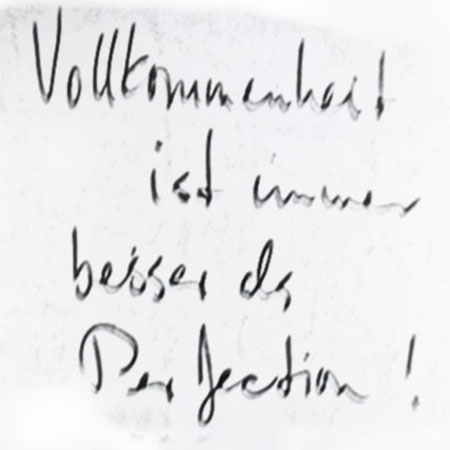
Wickery can be understood as a blending of "wicker" and basketry – and in multiple cultural paradigms. "Wicker" tends to reflect Eurocentric cum Anglocentric utilitarian sensibilities, thus the term "wickery' aims to be more expansive, and more inclusive, culturally. Also, wickery and the exploration of other aesthetic qualities and indeed kinds of perfection is somewhat confronting. In wabi-sabi there is no exact definition that non Japanese speakers can rely upon due to the Japanese fondness for ambiguity. Wabi is derived from the root wa, which refers to 'harmony, peace, tranquility and balance'. All quite desirable but none are unambiguously anything much to do with 'perfection'.... Click here to read on
Thursday, January 25, 2018
Some Notes On Basket Making
Some notes and links relative to basket making
Dr Grace Cochrane AM
Click on an image to enlarge
Virginia Kaiser:
- http://www.southernhighlandnews.com.au/story/2441646/sturt-exhibition-celebrates-virginia-kaiser/
- file:///C:/Users/grace/AppData/Local/Microsoft/Windows/INetCache/IE/W99RICS4/news_augsept12.pdf
THE final works of Virginia Kaiser are on display at Sturt Gallery.
The late Virginia was recognised as one of Australia's leading contemporary basket makers during her 30-year career. Ms Kaiser was inspired by the environment and landscape, including within the Highlands. She will be honoured at Sturt's latest exhibition, The Poetry of Place - The fibre art of Virginia Kaiser (1945-2012), which opens on Sunday. It will be a very special exhibition for Sturt.
Ms Kaiser taught at the gallery and completed two residencies there.
- https://itscrowtime.wordpress.com/2014/09/03/the-poetry-of-place-by-virginia-kaiser-1945-2012/
- http://www.browngrotta.com/Pages/kaiser.php
Basketry NSW:
Basket makers may also be interested in the biennial Gathering of Australian basket makers. The next Basketry Gathering will be held at Natural Arch, Queensland 26 April-1 May 2017. More information can be found HERE. Previous Gatherings were held in Silverton, NSW (2009), Port Sorell, Tasmania (2011), Canberra (2013) and Bacchus Marsh, Victoria (2015).
Basketry SA:
Baskets Vic:
Basketry & Weaving with natural materials, Pat Dale.
Kangaroo Press, 1989. Reprint, 2002. Available for purchase by Members at the Cottage. $35
Fibre Basketry : Homegrown and Handmade. The Fibre Basket Weavers of South Australia Inc.; ed. by Helen Richardson
Extract from Grace Cochrane, exhibition
catalogue: Response to the Island,
Long Gallery, Salamanca Arts Centre, 2001
Gwen
Egg
Baskets, group of 10 from Dune, River and River stones series, coiled and stitched, various fibres including
cumbungi, eucalyptus, bracken fern, she-oak, sagg, native flax, kangaroo grass,
tussock grass, New Zealand flax, 1997, 1999. (4 x 9 – 15 x 28.5cm)
These baskets represent elements from the
strong headlands, long beaches and sand dunes near Dodges Ferry on Tasmania’s
east coast, where Gwen Egg lives. Born in Adelaide in 1951, she studied arts
and urban planning in Tasmania in the 1970s, before organising a class for
unemployed girls in 1983 triggered her own obsession with weaving in natural
fibres. She has worked, exhibited and taught consistently since that time.
Weaving became a language with which to
describe the coast where she lives, and as she learned more about the plants,
her weaving process changed: ‘ I began to notice detail: the bifurcated tip on
the Lomandra leaves, the lustrous pink at the base of the flowering stem of
Lepidosperma… and the curled monk’s hats that once protected the banksia
seeds…I found myself paring down the techniques…leaving only the essentials not
in competition with the materials or the form.’ Gwen Egg values discovering
links in processes across language, time and place: ‘Why are baskets from the
Northern Territory twined with a Z twist, as are mine, when traditional
Tasmanian baskets are twined with an S twist? I am altogether humbled by the
elegance, economy and versatility of the fibre artists of indigenous
cultures…like Ngarrindjeri weaver, Ellen Trevorrow and Maori fibre artist, Tina
Wirihana. Imagine [finding] that same flash of pink on the Sword Sedge used to
decorate a ‘sister’ basket from the Coorong, and to discover that Tall Spike
Rush was pao pao to Maori weavers
long before it was given a scientific name.’
Quotes from Gwen Egg, ‘Weaving Familiar
Territory’, Textile Fibre Forum, no
61, 20/1
Pers Com
Wednesday, January 24, 2018
Wickery Cache #40/33/7250-1:2017
Well the narratives embedded in this lot are more than interesting. There is some storytelling to be unpicked and somewhat reassuringly the cache here might well be the starting point for an exploration that's headed somewhere other than a dead end.
Watertight Wickery Predates Ceramics
'First Nation People' in North America, here Native Californians didn’t have pots and pans to use before Europeans contact and the consequent destruction of their way of life and cultural landscapes. Many 'First Nation cultures' – Australian Aboriginal & Polynesian peoples for instance – did not have access to ceramic technologies either. So, how do you cook, if your culture doesn’t use pots?
Along with other culture, Native Californian people are famous virtuosos of basketry. One basket might well take many months to complete, and is woven with many native plant materials that, themselves, take long hours of work to harvest and process. This basket depicted here is as watertight as any pot and is woven in a traditional Miwok style.
![]() |
| Click here to go to source |
Interesting so-call 'alternative culture' in the Western world have somewhat romantically picked up on the technology with this video.
![]() |
| Click here to access the video |
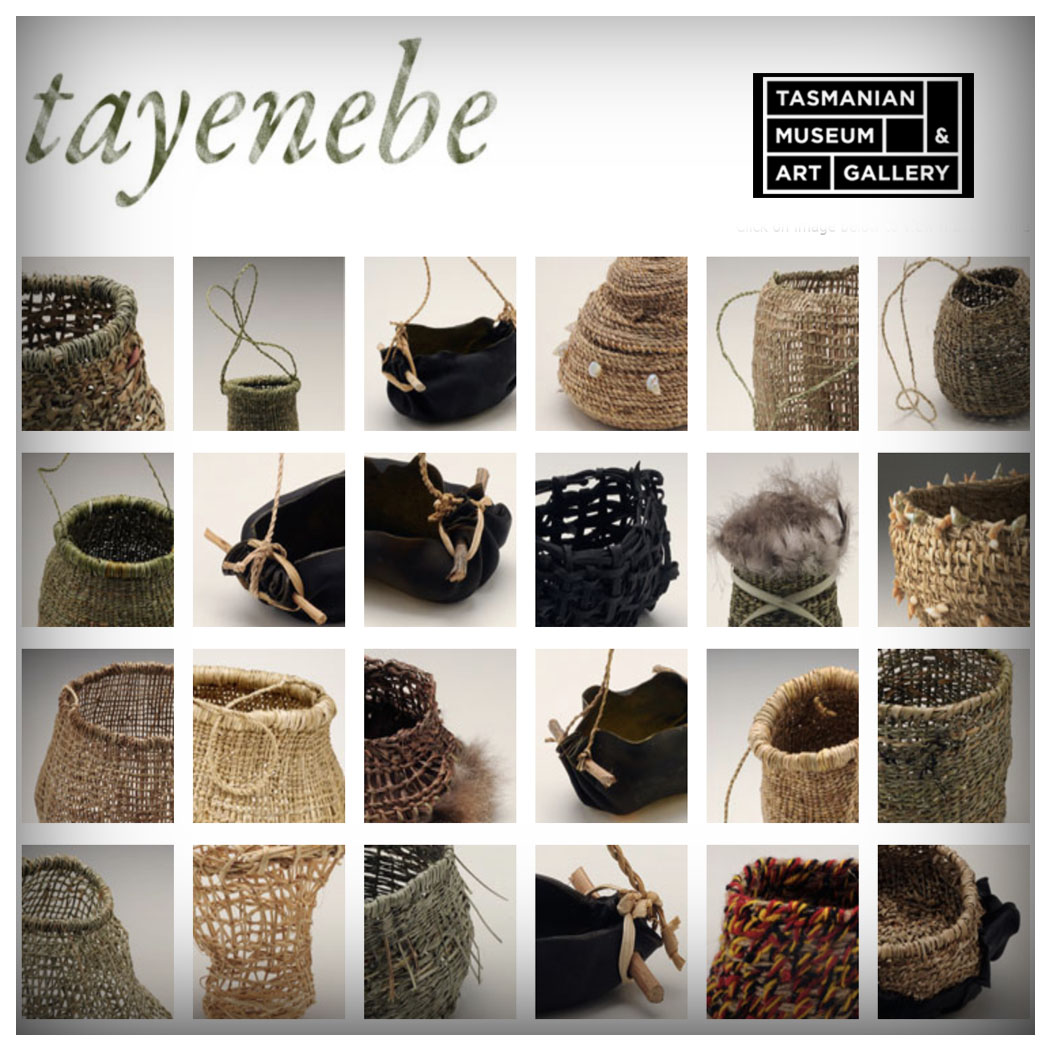
\In Tasmania the First Tasmanians are reviving traditional palawa culture. tayenebe, a Tasmanian Aboriginal word meaning ‘exchange’, celebrates the revitalisation of Tasmanian Aboriginal weaving that has been taking place in recent years. While the woven baskets may not be water tight the related vessels made from kelp would have worked in unisome in food gathering and preparation.[LINK]
Zulu Ukhamba baskets, also called Zulu beer baskets or Zulu pot baskets, are known for their beauty and durability. They are woven from coiled grasses wrapped with strips of Ilala palm leaves, and dyed with extracts from local vegetation. The waxiness of the palm fiber, along with its tendency to swell when wet, helps make the baskets watertight. Traditionally, the Zulu used them for storing and transporting water, or homemade beer, and the slight leaks worked to the advantage of keeping the liquids cool.
Currently these baskets are more likely to be used for decoration Zulu households given the increasing availability of cheap plastic and metal containers.
And there we go, celebrants and adherents to 'the colonial project', thinking that the industrial era, had and has, given them/us/whoever a head start in the survival race. It seems that it turns out that before there were pots and pan there had always been the designed possibility of a ''cool drink' [LINK]
Tuesday, January 23, 2018
HOBART WICKERWORKS
FROM TROVE: BRIDGES BROTHERS. BASKETS AND WICKERWORK. Messrs. Bridges Bros, have behind them the experience of three generations in basket and wickerwork, and their reputation is worthily upheld by their part of the exhibition. A special feature arc the chairs, settees, lounges, piano stools, etc, of sea-grass, a material now coming very much into use. Malacca cane is used for the stays, which gives extra .strength, and the ÃeeiiÃt is a strong and serviceable article, which is at the same time light and attractive in appearance. Other articles in this material "are fancy afternoon tea tables, push-carts, and baby carriages, music stands, etc. Willow work is also well represented. A prominent feature is an overmantel of the shell pattern, a very fine bit of work. Then there are upholstered lounge chairs of various patterns, flower stand, and other articles of furniture, and a wide range of baskets, fishernmen's baskets, travellers' hampers, linen baskets, etc. The aim of the firm is to use in all instances only the very, best materials, and ]to apply to these... https://trove.nla.gov.au/newspaper/article/1057010
Monday, January 22, 2018
Subscribe to:
Posts (Atom)